book review by Katerina Malakate
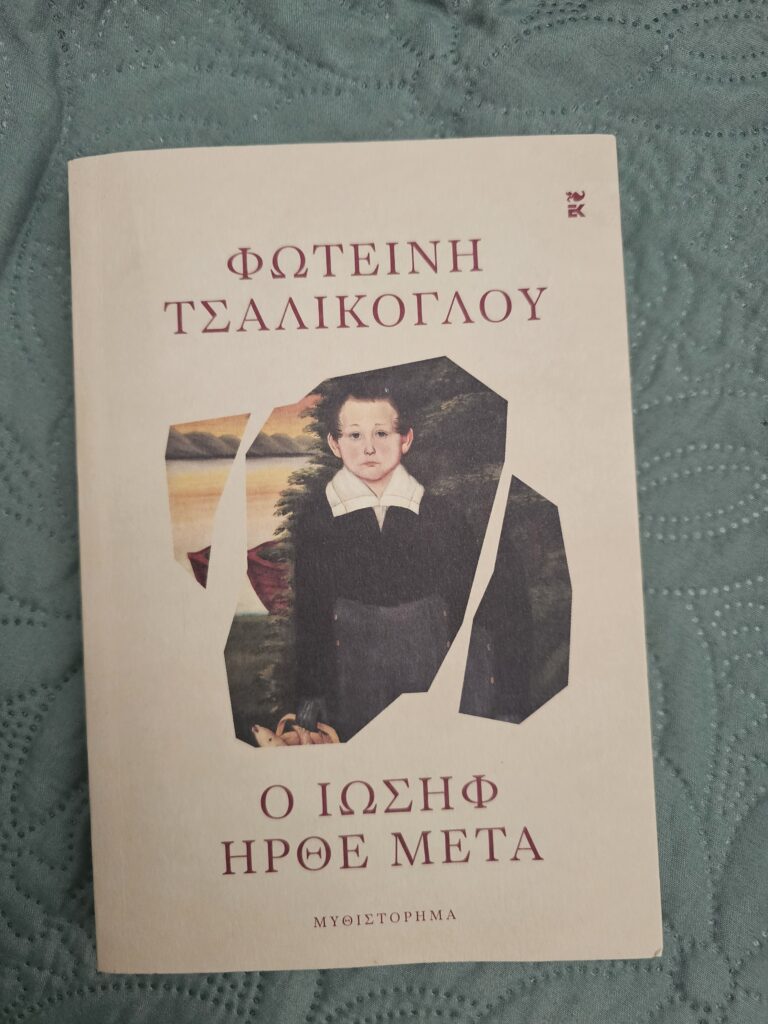
Joseph is Evil. He was born in the place of another baby, and from the very beginning, he tore his mother apart. He was cruel, a tormentor to his mother and sister, especially to his mother, who adored him no matter what he was. The father, sometimes absent, sometimes just standing and watching; he, the bearer of collective Evil. Joseph is the embodiment of evil itself.
The story is narrated by the sister, Thalia, who watches her mother suffer every day and ultimately die a double death, while her father tells endless stories from the past, loading them onto her, piling them up on her shoulders. A father both hero and traitor. His mother killed herself; she too.
The book explores a deep and unspeakable trauma: that of mental illness, of the murderer. The author handles it delicately, avoiding the insertion of her psychotherapist alter ego into the text, except at the very last moment. There are no answers. Perhaps the only answer lies in human nature itself, in the way our relationships are shaped: a balance of terror on a balcony ledge or among the branches of a tree. Life and death don’t matter. Not even survival itself. There is only one concern, to save the child, for it not to be evil, not to be perpetrator, not to be victim, not to torture, not to be tortured.
The short novel begins with an unborn child and ends with an unborn child. The circumstances differ, yet the same command remains, protection and love, against an unbearable inheritance. It closes with another, foreign child, yet still ours, hugging its teddy bear.
At first, I followed the plot with mild interest; I thought I’d read it all before in We Need to Talk About Kevin. But then the narration reached its crescendo, it demanded my full attention, and I longed for redemption. Redemption never came. Only everyday life, plain and unspoken, whispering each day how much you have failed.
They say time dulls passions. Even when it involves so many deaths? It had been a long time since I last read a book by Fotini Tsalikoglou. was it my reader’s block these past few years, or the surrounding sense that Greek literature lacks depth? Whatever it was, the fault was mine.
Katerina Malakate
The book was published in Greek “Ο Ιωσήφ ήρθε μετά” By Kastaniotis editions